


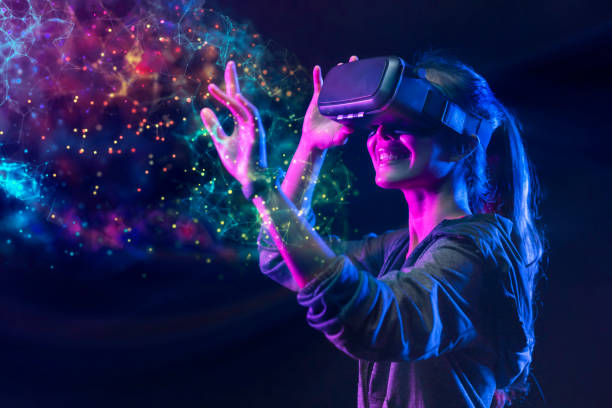
Mixed reality (MR) is a term used to describe the merging of a real-world environment and a computer-generated one. Physical and virtual objects may co-exist in mixed reality environments and interact in real time.Mixed reality that incorporates haptics has sometimes been referred to as visuo-haptic mixed reality.
A 2007 paper describes an interreality system comprising a real physical pendulum coupled to a pendulum that only exists in virtual reality.This system has two stable states of motion: a “dual reality” state in which the motion of the two pendula are uncorrelated, and a “mixed reality” state in which the pendula exhibit stable phase-locked motion, which is highly correlated.
Augmented Reality (AR)
Overlays digital content onto the real world using devices like smartphones or AR glasses.
Virtual Reality (VR)
Creates entirely virtual environments where users are fully immersed and interact through VR headsets.
Human-in-the-loop operation of robots
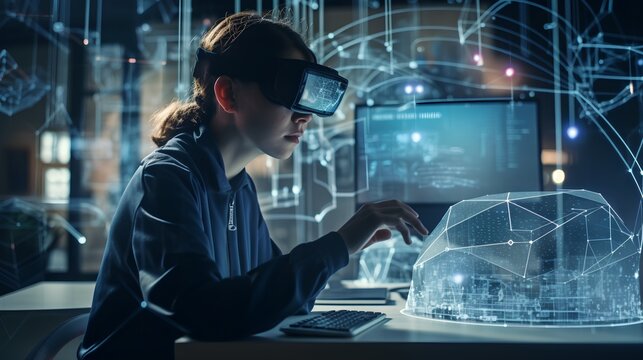
Computer Vision
Training and Simulation
Design and Visualization
frequently asked question
What is Mixed Reality?
Mixed Reality (MR) is a technology that blends physical and digital worlds to create new environments and visualizations where physical and digital objects coexist and interact in real time.
How does Mixed Reality differ from Augmented Reality (AR) and Virtual Reality (VR)?
AR overlays digital content onto the real world (e.g., Pokémon GO). VR creates fully immersive virtual environments that are entirely separate from the real world (e.g., Oculus Rift).MR combines aspects of both AR and VR, allowing interaction between physical and virtual objects.
What are some common applications of Mixed Reality?
Gaming: Interactive and immersive gaming experiences. Training and Simulation: Realistic training scenarios for professionals in fields like medicine, aviation, and military. Design and Visualization: Enhanced design processes in architecture, engineering, and other fields. Education: Interactive and engaging learning environments.