


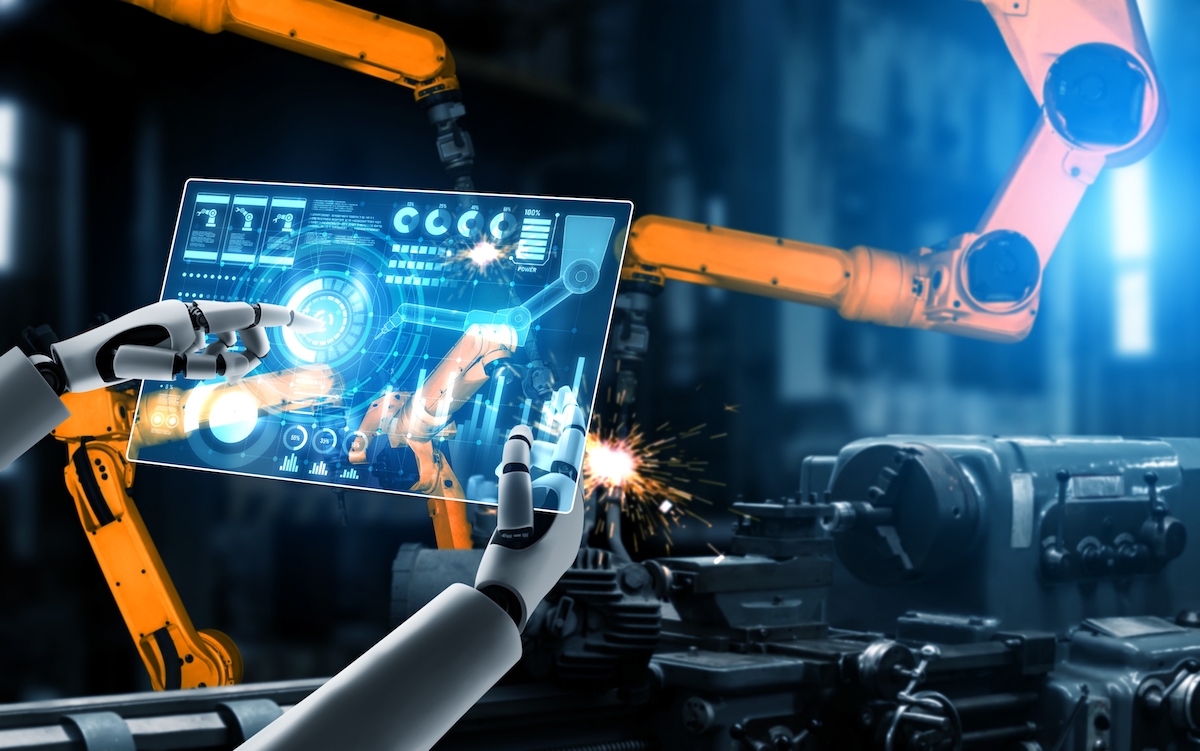
There are many applications for AI in manufacturing as industrial IoT and smart factories generate large amounts of data daily. AI in manufacturing is the use of machine learning (ML) solutions and deep learning neural networks to optimize manufacturing processes with improved data analysis and decision-making.
A commonly cited AI use case in manufacturing is predictive maintenance. By applying AI to manufacturing data, companies can better predict and prevent machine failure. This in turn reduces expensive downtime in manufacturing processes. AI in manufacturing has many other potential uses and benefits, such as improved demand forecasting and reduced waste of raw materials.
Quality Control
AI-powered computer vision systems inspect products for defects or inconsistencies during or after production.
Robotic Process Automation (RPA)
AI-driven robots and automation systems perform repetitive and complex tasks with high precision.
More visibility and real-time analysis
Design and Simulation
Customization and Personalization
Workforce Augmentation
frequently asked question
What is AI in manufacturing?
AI in manufacturing refers to the integration of artificial intelligence technologies and techniques to improve various aspects of the manufacturing process, such as production efficiency, quality control, predictive maintenance, and supply chain optimization.
How can AI improve predictive maintenance?
AI improves predictive maintenance by analyzing data from machinery sensors to predict when equipment is likely to fail or need maintenance.
What are some common applications of AI in quality control?
AI is commonly used in quality control through computer vision systems that inspect products for defects or inconsistencies. These systems can identify issues such as surface defects, misalignments, or incorrect dimensions with high precision.